
Climate Change Reshapes Maritime Routes
Rising temperatures and shifting oceanic conditions are altering traditional maritime lanes compelling the shipping industry to adapt. The frequency of Category 4 and 5 hurricanes has increased by almost 30 % per decade posing significant risks to global trade and navigation. As sea levels rise, major ports face increasing risks of flooding, infrastructure damage and operational disruptions. European ports are particularly vulnerable with projections indicating that severe sea levels could climb by more than 1 meter in the North Sea, Western Baltic and parts of the British and French Atlantic coasts under high-warming scenarios. The Port of Rotterdam has already invested in adaptive measures like storm surge barriers and elevated docks to mitigate these risks. A study indicated that from 2010 to 2100, ports handling over 200 million additional tonnes of cargo have been exposed to ocean elevation exceeding 4.5 meters particularly in Spain, UK, Ireland, Portugal and Norway.
Melting Arctic Ice – New Shipping Lanes
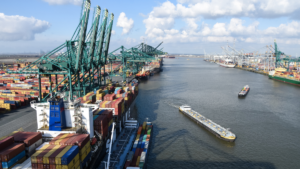
Once navigation through the frozen expanse of the Arctic was not thought possible however , the Artic region is transforming into a key maritime route . As temperatures elevate the ice that once blocked these passages is melting creating shortcuts between continents. The Northern Sea Route (NSR), which connects Europe and Asia via the Arctic has seen increased traffic, reducing voyage times compared to traditional sea lanes like the Suez Canal. The number of voyages in the Canadian Arctic has quadrupled since 1990, extending shipping seasons in certain areas. Not only was the NSR clear of ice, but all the channels of the Northwest Passage remained largely ice-free for an extended period. Unpredictable ice conditions still pose risks, impacting trade reliability.
 Credit;UNCTAD
Shifts in Ocean Currents
The US Port of Miami is located in a region vulnerable to extreme weather events, including hurricanes and rising temperatures compelling the port to invest in extensive flood protection and infrastructure upgrades to safeguard its operations as it was encountering challenges from the increasing frequency and intensity of storms, which delayed timelines and operational flow. Port governance literature has charted the trend towards devolution of port services to the private sector also showing how the increasing influence of external private actors such as shipping lines and global terminal operators affects decisions on expansion and service provision, producing a more multifaceted and polycentric kind of port governance. There is a school of thought that green ports should endeavour to limit emissions while another stresses on climate adaption measures. Both mitigation and adaptation actions are partly linked to the commercial decisions of port actors but also partly driven by external actors namely society, government and regulators. Hence concession contracts and commercial relationships need to be reviewed with a more integrated vision and approach to sharing future costs and benefits between the port authority and commercial partners. The diversification of the port business model will see a larger focus on energy production and provision, requiring explicit inclusion of external stakeholders particularly energy companies, in port governance. Additionally port governance will see a return to prominence of the public dimension, both in terms of national decarbonisation plans particularly regarding adaptation to an uncertain and turbulent future. As ports are both commercial activities and national infrastructure these different identities will need to be united in a joint vision.
Disruptions to Shipping Schedules
 Credit;SINAY
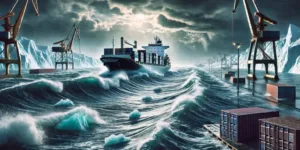
With storms becoming more frequent and unpredictable, disruptions to schedules and logistics are increasingly common, causing delays and rerouted voyages. These challenges force companies to implement adaptive strategies to maintain efficiency and reduce operational costs. Hurricanes and heavy storms disrupt shipping schedules, delay cargo deliveries and endanger crew safety. A known event occurred in 2022 when Storm Eunice battered Northern Europe, causing widespread disruptions to logistics and energy supplies. Major shipping hubs, including the United Kingdom and the Netherlands, faced delays as high winds and severe weather conditions forced temporary shutdowns. Shipping companies have to rethink logistics planning and adopt advanced forecasting technologies. In the year 2021 severe flooding in Germany and Belgium disrupted inland water transportation, delaying cargo movement and increasing insurance costs.
Climate Change Additional Costs
As global temperatures continue to shift, energy security is becoming a growing concern, with fuel availability and transportation becoming more unpredictable. This volatility leads to higher operational costs for shipping companies as they must account for fluctuating fuel prices and extended travel times. Regulatory and compliance expenses are significantly enhanced as in order to mitigate environmental risks, governments and international bodies impose stricter regulations thereby increasing operational costs. While beneficial for long-term sustainability, these measures demand substantial investments in fleet upgrades, impacting the overall economy of the maritime sector. Accompanied by stricter regulations and evolving fuel efficiency standards shipping companies face higher operational and financial burdens . New regulations, like the IMO 2020 sulfur cap, require vessels to drastically reduce greenhouse gases by using low – sulfur fuels or adopting cleaner technologies. These changes can result in longer transit times as vessels slow down to meet speed restrictions or adjust fuel consumption strategies.
 Credit;BBC
Heavy Capital Investment
As severe weather events become frequent and intense, maritime hubs are upgrading their facilities to develop climate-resilient infrastructure which includes reinforcing of quay walls and improved drainage systems to manage the growing risks of flooding. Europe’s largest Port of Rotterdam in the Netherlands has taken proactive measures to enhance its facilities in response to rising climate risks. To ensure safety and functionality, Rotterdam has integrated real-time monitoring systems to track weather patterns and adjust operations. Such upgrades are costly requiring advanced engineering and long-term planning to achieve both environmental and economic resilience.
Green Shipping Technologies – Alternative Fuels
Under environmental scrutiny the shipping sector is reducing its carbon footprint and innovative trends and technologies are emerging to meet sustainability goals. Adaptive trends include shifting from traditional hydrocarbon fuels to biofuels, LNG (liquefied natural gas), ammonia and hydrogen to reduce greenhouse gases . Wind-Assisted Propulsion technologies such as sails and rotors, are being integrated into vessels to harness wind power to reduce reliance on fuel, making operations more efficient and less pollutive. Some vessels are resorting to batteries based propulsion which lowers emissions for short-haul journeys. Vessels are being fitted with Carbon Capture Storage (CCS ) systems that capture carbon dioxide from exhaust emissions preventing it from entering the atmosphere. The innovation is particularly important for aligning with strict global emissions standards. Air lubrication systems, energy-saving propellers and hull modifications are being re-designed to reduce fuel consumption.
 Credit;Sky News
Digitalization and AI
The integration of artificial intelligence (AI) and digital technologies enables efficiency enhancement and adaptability in the face of climate-related challenges as predictive analytics through AI algorithms analyze vast amounts of data from vessels, predicting potential issues such as mechanical failures, adverse conditions and fuel consumption. The AI generates optimized routing by combining real-time data with machine learning and optimizing vessel navigation. Autonomous vessels operate with minimal human intervention especially in volatile conditions. Smart Sensors is revolutionising the way ships monitor and report on their systems as AI-powered sensors compile real-time data on everything from engine performance to cargo conditions.
Marine Disasters in UK
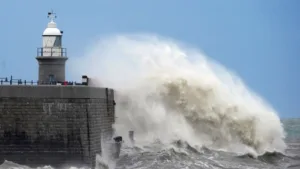
As ports are located in coastal zones, low-lying areas and deltas they remain vulnerable to adverse climate change. Operations and infrastructure at UK ports are liable to be affected by rising sea levels, floods, storm surges and strong winds.With a changing marine and coastal climate the extreme sea conditions previously used for designing existing port infrastructure are more likely be exceeded and there is potent risk to flooding of port infrastructure disrupting port operations . In 2018 the UK Government revised its projections for sea level rise from its 2009 projections. Exceeding the original design conditions increases the likelihood of the structural failure of port infrastructure including breakwaters. In 2014, the sea wall in Dawlish in Devon collapsed, closing the main railway line from London to Cornwall for two months. The direct cost of reinstating the railway line was £50 million, but the related business disruption of this key transport link slammed UK’s economy with losses of UK £1.2 billion.
Intergovernmental Panel on Climate Change
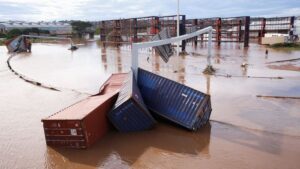
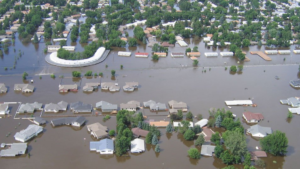
Rising sea levels, shifting ocean currents and increasing extreme weather events are disrupting global shipping routes. According to the Intergovernmental Panel on Climate Change (IPCC) sea levels were to rise by up to 1 meter by 2100 threatening key port infrastructures and coastal trade hubs. These disruptions are forcing the industry to reframe logistics, fuel efficiency and supply chain resilience .Ports by their very nature are located in hazard-prone areas along the coast, close to rivers and constantly exposed to natural hazards and climate extremes, the occurrence of which are expected to become frequent . Hazard impacts could not only cause physical damages to port infrastructure but also disrupt port operations. Hurricane Katrina (2005) shut down 3 ports in the United States that handle almost half of the country’s agricultural exports. Similarly, the 2011 Tohuku earthquake and tsunami damaged maritime assets worth 12 $ USD billion, caused trade bottlenecks at Japanese ports, which particularly hit the exports of vehicle manufacturing. As such, quantifying the likelihood of hazardous events happening and the potential economic implications associated with them is essential to prepare port authorities and other maritime stakeholders impact.
 Credit;Climate Flood Office
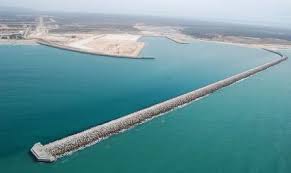
Despite the importance of ports for the economy, the climate risks faced by ports has not yet been quantified on a global scale. While natural hazards can cause physical damages to port infrastructure, resulting in reconstruction costs and operational downtime due to reconstruction, marine extremes can cause operational downtime without physical damages. The physical damages and revenue losses to logistics operations (terminal operators, carriers, shippers) as a result of downtime combined is what we call the climate-related risk to ports . Studies show that marine extremes can cause operational disruptions to around 40 % of ports globally, while 50% of ports globally are exposed to four of five natural hazards including fluvial and pluvial flooding being most prevalent . Infrastructure may be designed for operational purpose such as foundations of quay walls in seismic prone active seabed , orientation and design of breakwaters exposed to extreme or monsoon waves and surges and the drainage system when exposed to fluvial and pluvial flooding.
 Credit; BBC
Quantification of Climate Change Damage
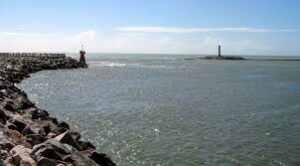
The climate risk totals 7.6 $ USD billion per year mostly attributable to tropical cyclones and fluvial flooding. This number is over half as large as a previous estimate of the climate risk of road and rail infrastructure on a global scale, illustrating that although ports only encompass relatively small areas, the high value and density of assets can contribute to the climate risk on a national and global scale. The largest climate risks in absolute terms are faced by ports in Asia, Gulf of Mexico and ports in Western Europe in view of the large areas of critical infrastructure exposed. In relative terms ( per square meter of port area) however, the highest risks are faced by ports in middle income countries. Despite the absolute risk being particularly large in high-income countries, ports in high-income countries have the financial strength to adopt protective measures (e.g. higher flood protection standards, elevated terminals) to reduce risk in relative terms as compared to middle income countries. While the reconstruction costs of terminals, cranes and warehouses are the leading contributor to climate risk, damages to the critical infrastructure (roads, rail, electricity) in the port vicinity is still an important contributor to global climate risk (20 %). On a port-level, it is the leading risk contributor for 12 % of ports, in particular in the United States and Western Europe, mainly due to flooding of road and railway assets. As such, flood risk management of critical infrastructure assets in the port’s vicinity should therefore be an integral part of risk management, requiring collaboration between the different entities responsible for maintaining the infrastructure. The relative trade risk (relative to the value of trade) is high in ports serving small island developing states being disproportionately reliant on maritime trade. Ports are particularly exposed to various natural hazards, due to their locations along open coasts or in low-lying estuaries and deltas as their setting makes them susceptible to rising sea levels, storm surges, waves and winds, riverine and pluvial flooding as well as seismic activity or tectonic events such tsunamis.
 Credit;Brittanica
Coastal Land Subsidence
Uneducated coastal land reclamation or coastal land subsidence due to extensive urban development may result in additional or relative sea level rise and increased flood risk for large port cities, requiring improved adaptation pathways.
Loss to Port Infrastructure
Economic losses arising from both direct damages to infrastructure and operational disruptions/delays across interconnected global supply chains have been extensive particularly in regions affected by tropical cyclones and related storm surges and waves. Cumulative losses from weather-related disasters in 2017 including the devastating Caribbean hurricane season, have been estimated at US $ 320 billion . Sea-level rise is largely driven by global warming predicted to reach 1.5° C as early as in the 2030s with significant impacts for coastal developing States .Despite a brief emission dip caused by the COVID-19 pandemic, and signs of acceleration of ambition in many countries, the latest UNEP Emissions Gap Report indicates that the temperature would rise far beyond the Paris Agreement goals of limiting global warming to well below 2°C and pursuing a limit of 1.5°C.
Scientific Basis
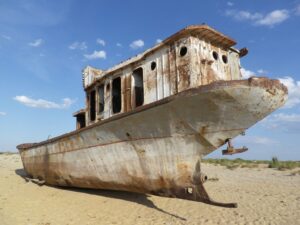
Global warming can force large mean sea level changes, by the combination of (i) ocean thermal expansion due to the increase of the ocean heat content; (ii) ocean water mass increases from the melting of the continental ice sheets, caps and glaciers; (iii) isostatic adjustment, anthropogenic coastal subsidence and changes in land water storage. Recent observations suggest a globally averaged mean sea level rise (SLR) of about 4.0 cm per decade and such higher mean sea levels, combined with future extreme storm surges, waves and tides could generate devastating extreme sea level events posing threat to ports infrastructure.
 Credit;Times of Central Asia (Aral Sea)
Ports are national and commercial assets with long lifespans, which means that changes in the recurrence (return period) of extreme sea level events (and associated waves) affect the risk of flooding at facility level and the choice and design of requisite climate change adaptation measures. Although state-of-the-art digitally based modeling projections appear daunting, accelerating mean sea level rise in future decades could increase extreme sea levels even further. The potential costs of inaction, prevention and mitigation of climate change impacts on ports and other key transport infrastructure should become a priority as part of sustainable development and climate strategies.
Author ; Nadir Mumtaz
Trademark Blue Economy (IPO)

Credit;
https://www.nature.com/articles/s43247-022-00656-7
https://www.tandfonline.com/doi/full/10.1080/18366503.2021.2007615
https://www.sciencedirect.com/science/article/pii/S0966692324001972
https://sinay.ai/en/the-impact-of-climate-change-on-maritime-routes-and-operations/
https://communities.springernature.com/posts/ports-at-the-forefront-of-climate-impacts
https://gca.org/climate-adaptation-in-ports-a-global-imperative-for-resilience/
https://www.hrwallingford.com/insight/preparing-ports-climate-change-prevention-better-cure

Leave A Comment