
Food Security & Ports
This year Louis Dreyfus Company (LDC) inaugurated a grain storage facility in Multan, Pakistan adding approximately 40,000 tonnes of capacity in Pakistan’s important wheat-producing region , achieving the distinction of the global agricultural merchant’s first owned industrial site in the country.
Fallacy of Food Security
Pakistan’s agriculture , logistics and maritime supply chain does not lack the production of grain rather it lacks the infrastructure that allows grain to survive the journey from the field to global markets , being loaded and unloaded at ports. While the United States Department of Agriculture’s latest estimate place Pakistan’s 2026–27 wheat crop at around 29.6 million tonnes the LDC’s 40,000 tonnes amount to roughly 0.14 % of annual grain production. Despite this, the new facility is substantial enough to matter within LDC’s South Punjab operations yet minuscule to alter Pakistan’s storage equation on its own. Ukrainian Ports in the Black Sea have massive grain silos at its ports and maintain a global wheat and grain supply chains .
Investment or Indictment
 Credit;Profit
Digital Warehousing
Twin Fallacy of Revenues
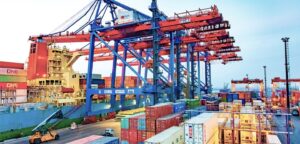 Credit ;ICSTI
Ports at Karachi operate under federal statutes and own significant areas of prime estate and in the territorial waters as well . The revenue including Income tax , Sales tax and Customs is collected at source online and digitally when vessels berth and load or unload cargoes including containers . At times the cargoes and containers are transported to bonded and dry ports acroass the lenght and breadth of the country . How correct is the claim that Karachi accounts for the major FBR source of revenue of the country and it is not getting its due share in return , under the constitutional National Finance Commission (NFC) award ? Is such a claim justified for the coastal and port city Karachi to acquire the status of a province ? Needs threadbare and non partisan analysis rather then sensationalism .


Leave A Comment