Export Facilitation by Central Bank
Pakistan provides export financing schemes to support exports through the State Bank of Pakistan (SBP) which operates through commercial banks and the other scheme is administered by the Federal Board of Revenue (FBR). The exporters are the beneficiaries. The schemes face critisism that mainly large exporters improve their export performance by utilizing these schemes and the lengthy process and time lag between production and delivery hinder exporters performance.
Export-Import Bank
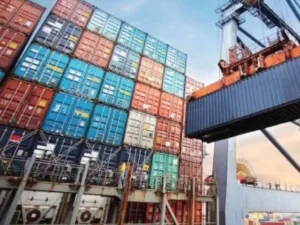
As the country’s Export Credit Agency and a policy institution the Export-Import Bank of Pakistan (Pak EXIM) supports the government’s efforts by managing key export financing schemes aimed at addressing the financing needs of exporters and strengthening Pakistan’s export capacity. To facilitate greater access to working capital for exporters the Export Finance Scheme (EFS) coverage has been enhanced from PKR 1,000 billion to PKR 1,500 billion for the fiscal year 2026-27 , providing long-term loans at a highly concessional rate of 2 % for two years and then at a fixed rate of 5 % for the next eight years. The cost of the subsidy is around PKR 25 billion for covering 11.5 % interest cost.
 Credit;Tribune
An amount of PKR 300 billion has been allocated for SME exporters, Agri-SMEs and “ New Borrower “ with the objective of broadening access to export finance for businesses that traditionally had limited access to the scheme.
Exports take Precedence over Remittances
The enhanced allocation is expected to provide greater access to financing across the export sector particularly enabling SMEs, new entrants and emerging exporters to participate more effectively in Pakistan’s export economy. The enhanced EFS limits have been allocated to participating financial institutions and are currently available for eligible exporters. The government has withdrawn an earlier subsidy of PKR 76 billion for absorbing the transfer cost of foreign remittances underscoring its preference to promote exports over remittances. Exports remained $ 11.5 billion less than remittances in the previous fiscal year.
Background of Subsidies – Inefficiences Inherent
 Credit;Cutting Edge
The Long-Term Export Growth Financing Facility (LTEGFF) was introduced with PKR 350 billion in financing lines allocated to support long-term investment and export capacity building. At times the lag between production and payment make exporters vulnerable to liquidity shocks and defaults and thus render them more reliant on working capital financing than domestic firms . The Export Finance Scheme (EFS) and the Long-Term Finance Facility for Plant & Machinery (LTFF) provide loans at subsidized interest rates for Pakistani exporters to finance working capital and the purchase of machinery and equipment respectively there being a direct financial cost of the subsidies. FBR tax collection exceeded PKR 13 trillion during the fiscal ended on 30th June , 2026 . Despite raking in profits the export sector contributed around PKR 110 billion in income tax whereas the salaried sector contributed almost PKR 600 billion as income tax. The average monthly wages of a textile denim worker remain at $ 135 .
Risk Exposure
The EFS offers short-term loans with a maturity up to 180 days, to finance working capital for exporters at subsidized interest rates, allowing commercial banks to refinance loans they provide to exporters by borrowing from the State Bank of Pakistan (SBP) at below market interest rates .Commercial banks bear the credit risk if an exporter defaults on its loan.
Concessional Interest Rate – Stifles Fiscal Space
Between 2015 and 2017 the interest rate charged to exporters borrowing under EFS was 2% per annum and the refinancing rate for commercial banks was 1 %. Since the average market lending rate over the same period was 9 %, the interest rate subsidy provided to exporters or the difference between the market lending rate and interest rate charged on EFS loans was 7 percentage points . The annual average value of loans provided by EFS at one stage reached US $ 3.6 billion or 16 % of Pakistan’s total exports . At the same time the diversion of easily available capitol to the exports sector is significantly reducing availibilty of credit for other industry .
Regional Subsidies – Subsidising Imports
Turkiye subsidizes exporters via a rediscount credit scheme, a form of subsidized export credit, mostly financed by the Central Bank of the Republic of Türkiye . However , the import dependency of exports as most exporters remain heavily dependent on imported raw and intermediate goods require payment in Foreign Exchange in advance.
For non-textile exports when oil prices increase the cost of production increases globally yet Pakistan is a labor abundant nation so its cost of production is less impacted by rising oil prices. In other words industrial labour is low paid and manufacturing sector is flourishing .
Carbon border measures and EU product sustainability rules are beginning to reshape export finance for developing country manufacturers , which pose challenges to the smooth flow of subsidised exports .
Authored by Nadir Mumtaz
Credit;

Trademark Blue Economy (IPO)
https://doi.org/10.35536/lje.2025.v30.i1.a3
https://doi.org/10.1111/caje.70013Digital 10.1016/j.bir.2024.06.004
https://www.sciencedirect.com/science/article/pii/S22148450240009
54 DOI: https://doi.org/10.32479/ijeep.12746 DOI No:
https://doi.org/10.56976/jsom.v 4i3.307
https://pid.gov.pk/site/press_detail/33862
https://tribune.com.pk/story/2620695/govt-picks-exporters-interest-cost
https://weeklycuttingedge.com/salaried-vs-exporters-pakistans-tax-imbalance/

Leave A Comment